Enter your email address below.
7 min read...
As a café owner, you know the feeling: that busy Friday evening when the queue at the bar stretches to the door, your staff can’t keep up, and frustrated customers decide to go to the competition instead. It’s precisely these moments that are making more and more hospitality entrepreneurs think about modernisation. And they’re not alone. In recent years, a quiet revolution has taken place in the hospitality sector, where digital POS systems and ordering kiosks are no longer a future dream but a concrete solution for everyday challenges.
I recently spoke with Marco, owner of a popular café in Utrecht, who told me: “I was always sceptical about technology. But since we implemented digital systems, it’s as if I’m running a completely new café.” This experience is far from unique. Let’s look at the five most important reasons why cafés are making the switch to digital solutions en masse.
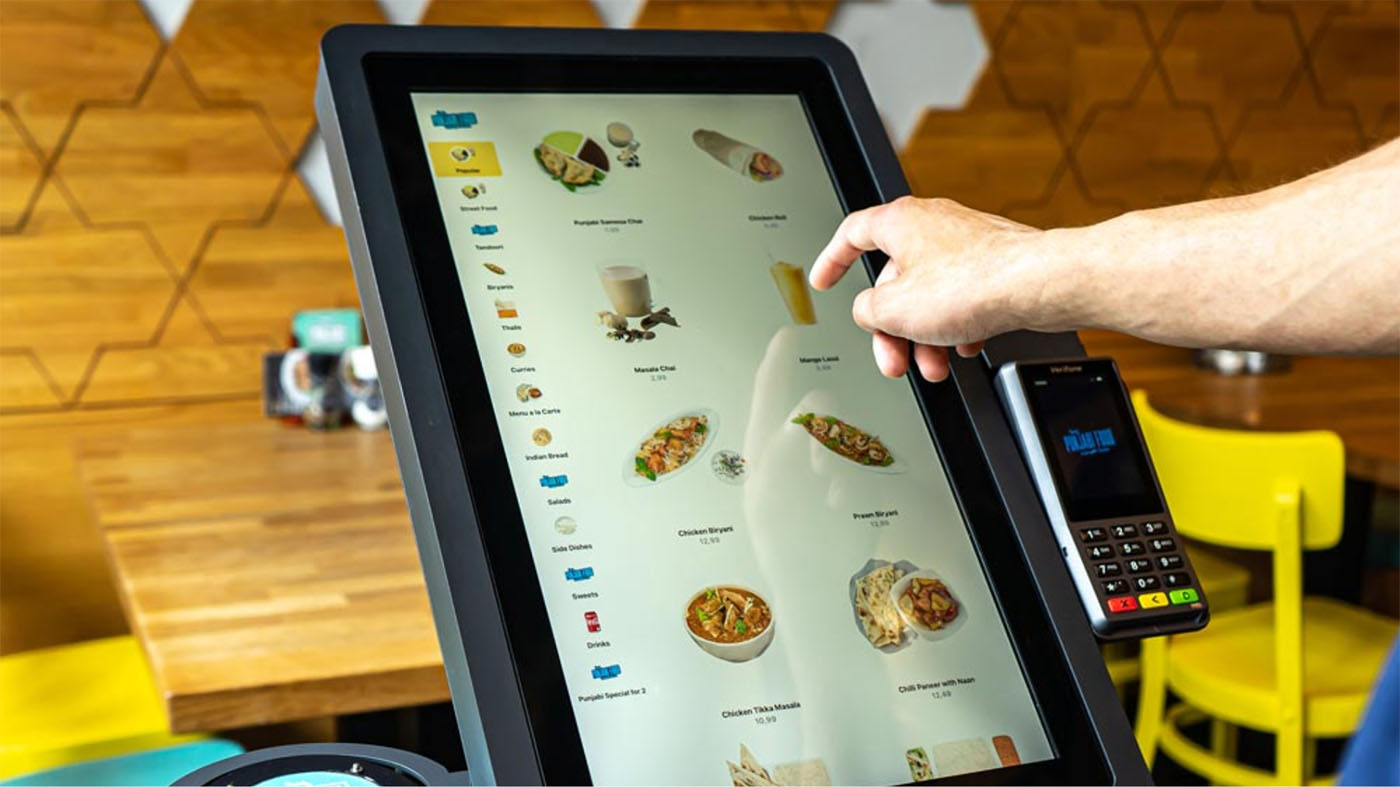
The biggest pain point in every café? Long queues at the bar during peak hours. Nothing frustrates customers more than endlessly waiting to order a drink. With ordering kiosks, multiple guests can place their orders simultaneously, without depending on a single cashier to serve everyone.
Think about it: with traditional service, you might serve 2 or 3 customers per minute. With four ordering kiosks in your café, suddenly 4 to 8 customers can place their orders simultaneously. The difference is enormous. Studies show that self-service kiosks can increase throughput by as much as 30-40%, especially during peak hours.
For guests, this means they no longer have to wait in frustration. They can browse the menu at their own pace, make their choice, and order directly. And let’s be honest: in the age of instant gratification, this is exactly what modern customers expect. They’re used to arranging everything instantly via their smartphone, so why should ordering at a café be any different?
Here comes the interesting part that many café owners don’t think about: digital systems are brilliant salespeople. Where a busy bartender might forget to ask if you’d like a portion of bitterballen with that, an ordering kiosk always does.
The software can make suggestions at the perfect moment: “Would you like a second beer for a combo deal?” or “Add a portion of nachos for just €3 extra!” This kind of smart upselling isn’t a pushy sales pitch, but a handy service that customers often experience positively. They see options they might otherwise have overlooked.
The numbers don’t lie. Major hospitality chains like McDonald’s reported a revenue increase of 20-30% per transaction after introducing ordering kiosks. For smaller cafés, these percentages may vary, but even a 10-15% increase means a significant impact on monthly revenue. If you average €8,000 per month, that could easily mean €800 to €1,200 extra — month after month.
We’re all human, and humans make mistakes. Especially in the rush of an evening shift, it’s not uncommon for orders to be passed on incorrectly. “I asked for no onion on my burger” or “This is a regular beer, but I ordered a special” — these situations cost not only money but also customer satisfaction.
With digital ordering kiosks, this problem largely disappears. Customers enter their own order exactly as they want it. They can make adjustments, add or remove extras at their leisure, without feeling like they’re holding up a busy staff member. The order goes directly to the kitchen or bar, eliminating misunderstandings.
This leads to less food waste (as fewer dishes need to be remade), fewer disputes with dissatisfied customers, and ultimately a better reputation. In times when a single bad review on Google or social media has an immediate impact on your business, this isn’t a detail — it’s essential.
A common misconception is that digital systems replace staff. In reality, it mainly changes the role of your team — and that’s actually a positive thing. Instead of repetitive tasks like taking orders and processing payments, your employees can focus on where they make the real difference: genuine customer interaction.
Imagine: your bar staff no longer needs to stand behind the register constantly. Instead, they can walk around, clear tables, create atmosphere with guests, and be extra attentive to people who need help. This personal touch is what distinguishes a café from a cafeteria — and it’s precisely that which you can strengthen with digitalisation.
Moreover, you’ll find that new employees are onboarded faster. Learning to operate a complex POS system takes time and training. With ordering kiosks, they mainly need to learn how to help customers who have questions or want to place a special order. The system handles the rest.
This is perhaps the most underestimated reason, but potentially the most valuable: digital systems collect data. And not just some random numbers, but concrete insights that help you run your café smarter.
With a digital POS system, you can see in real time which products are selling well and which are languishing. You can see exactly on which days and at what times it’s busy, so you can optimise your staff planning. You see which combinations customers like to order, which helps you create attractive deals. And you gain insight into your inventory management, so you don’t over- or under-purchase.
Consider seasonal trends, for example. Perhaps you notice that on warm days your rosé sales increase by 150%, or that after 10 PM mainly bitterballen and cheese cubes are sold. With this knowledge, you can adapt your purchasing, your menu, and even your marketing accordingly. You’re no longer making business decisions based on gut feeling, but on facts.
This data-driven approach ensures you work more efficiently, waste less, and ultimately earn more. It’s the foundation for growth and scaling — something that simply wasn’t possible with traditional systems.
Of course, I understand that the thought of such a digital transition might seem overwhelming. “Isn’t that terribly expensive?” or “Do we have to renovate the entire place?” are questions I often hear. The good news is that modern solutions are specifically designed to make things easy for you.
Many systems today are plug-and-play and integrate seamlessly with your existing setup. You don’t need to be an IT expert to install them, and most providers offer extensive support during implementation. Some companies, like Onesix, even offer a free 30-day trial period, so you can experience how it works in your café without any risk.
And the costs? Yes, there’s an initial investment, but consider the ROI: higher revenue through better upselling, lower staff costs because your team works more efficiently, fewer errors that cost money, and better decisions through data insights. Many café owners see the investment recouped within 6 to 12 months.
The hospitality industry is evolving at breakneck speed. Customers expect ever more: fast service, personalised experiences, and modern conveniences. Cafés that cling to traditional methods risk falling behind competitors who do move with the times.
Digital POS systems and ordering kiosks are no longer music of the future — they’re the present. And the benefits are too compelling to ignore: shorter wait times, higher revenue, fewer errors, happier staff, and valuable insights that help you take your business to the next level.
So, are you ready to take the step? Start small if you need to. Test it with one ordering kiosk and see what it does for your business. Talk to other café owners who have made the switch. And don’t forget: in hospitality, it’s all about people and experience. Digitalisation helps you do precisely that better.
Do you have experience with digital systems in your café? Or are you considering making the switch? Let me know in the comments — I’m curious about your experiences and questions!
Want to know how Onesix products like Kiosks, QR codes, and POS systems can strengthen your hospitality business? Feel free to contact us and visit this page for a complete overview of our hospitality solutions.

Daan is Head of Marketing at Onesix. This news site provides relevant articles for people working in or interested in hospitality, retail, and amusement parks.